
Everything has a Bottom Left
The Sandpaper Paradox, or The Perils of Being a Self-taught Anything

The point of sanding is to smooth the imperfections from a surface. You don’t want them to show through the finish and ruin it. But the second point of sanding is to rough up a surface, that way paint grips it and is more durable.
So when you’ve sanded a surface properly, is it meant to be smooth or rough?
I don’t know.
I would very much like to find out, because sanding is like jerking off a tuning fork. It has two points but I hate them both because my arm is aching and I’m quietly suspicious I’m wasting my time.
I want to know when I’ve done enough sanding and I can stop.
I’ve grabbed the internet at both ends and twisted but not been able to wring this information out.
If I’ve sanded enough will the surface look rough or smooth? I may have come up with the first ever stupid question. Supposedly there aren’t any stupid questions but there never used to be an internet either so I’m not ruling anything out. In high school I was handwriting assignments on spiders and Greece and the Boxer Rebellion that I’d looked up in the many volumes of our Encyclopedia Britannica. The supplanting of that book-and-pen-and-other-book technology with a magic electronic net for information seems, on balance, a far more unlikely event than me inventing a stupid question. And yet here we are, on that net, chilling together like buds. Hey bud!
If it was a stupid question, it would explain why the many tutorials on sanding don’t seem to address The Sandpaper Paradox. Sanding is just an arcane art that can make something rough and smooth at the same time. Don’t overthink it. Left is right, up is down, there is no God and he just followed you on Twitter. Better hurry up and delete those tweets from 2012.
But.
I suspect it’s really that sanding is a very basic skill and people creating tutorials are very advanced, so questions like “Thank you for showing me the right way to sand but when can I stop?” aren’t on their radar. The obvious information to impart in a tutorial is technique, whereas knowing when a surface looks about done is an assessment they’re making automatically, maybe even intuitively, with instincts honed by years of experience. As someone who’s delivered my fair shared of training– not on woodwork– sometimes it takes a beginner asking you questions to recognise there’s stuff you haven’t put in your PowerPoint because you aren’t even aware of it as information.
I’ll never forget overhearing a coworker on a call giving technical support. They were trying with increasing desperation to direct a client to the Start menu.
“Go to the bottom left and click the four squares– no you don’t need to scroll– bottom left– bottom left– no you can stop scrolling– stop scrolling– it’s just at the bottom left– yes it does– everything has a bottom left!”
Our client base was older and the level of computer literacy was mixed. This was my first proper job and the Everything Has a Bottom Left conversation was my first insight into how stark the difference is between having low ability at something, and starting from absolute zero.
I Need a Ron Swanson
Sanding is my bottom left. I don’t understand it so I’m just going to act like it’s not there, for a while at least. I could keep beavering away at it but I’m worried that in the absence of knowledge I’ll form wrong habits and be doing it so ineffectively it’s like I’m not doing it all. Also, I can’t emphasize this enough, I have the arm strength of a wacky waving inflatable tube guy. Sweating and cramping is rewarding when you know you’re achieving something by it, but when you’re plagued with doubt boy howdy is it demoralizing.
I wish I knew a Ron Swanson, that friend who knows what all the different drill bits are for, and not because of the one time they had to put together flat pack furniture with no allen key. Is that eternally handy and slightly intimidating dispensary of wood, life, and power tool knowledge a guy that exists in real life, or is he a TV trope based on a grain of oedipal nothing?
I’m left weighing up whether I want to drop more money on a woodworking class to learn this one thing, when I’ve just spent $400 on a picture framing course that didn’t really cover it (most of the class were using pre-painted wood for their frames).
In the meantime I’ve found a get out of jail free card. I screamed “Can I just not sand?” into the internet abyss and surprisingly the answer was “Sometimes, yes”.
Turns out there’s a liquid called deglosser that lets you paint over already painted surfaces. When all you’re doing is upcycling op-shop picture frames this is actually useful a lot of the time.
One thing I’m left with is a lot of respect for anyone who is a self-taught anything. Fuck it, even a brain surgeon, if you’ve got a few patients through alive. Doing anything in the absence of touchstones and ending up successful means you made it with your own judgement and internal standards you developed in the midst of uncertainty. That shit is haaaaaard.
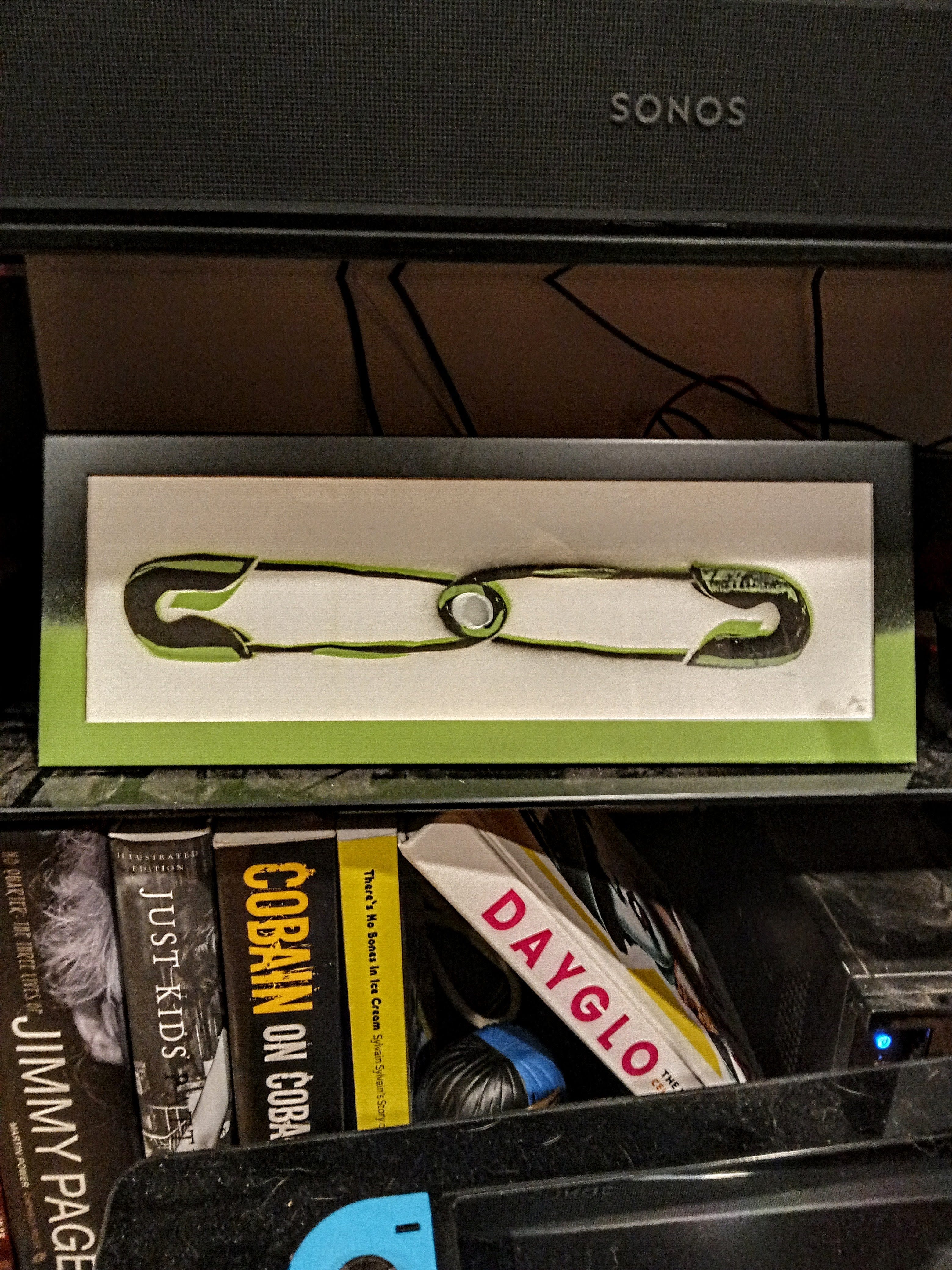
I hate sanding. All my knowledge gathering energy is spent towards the holy goal of not sanding anything ever.